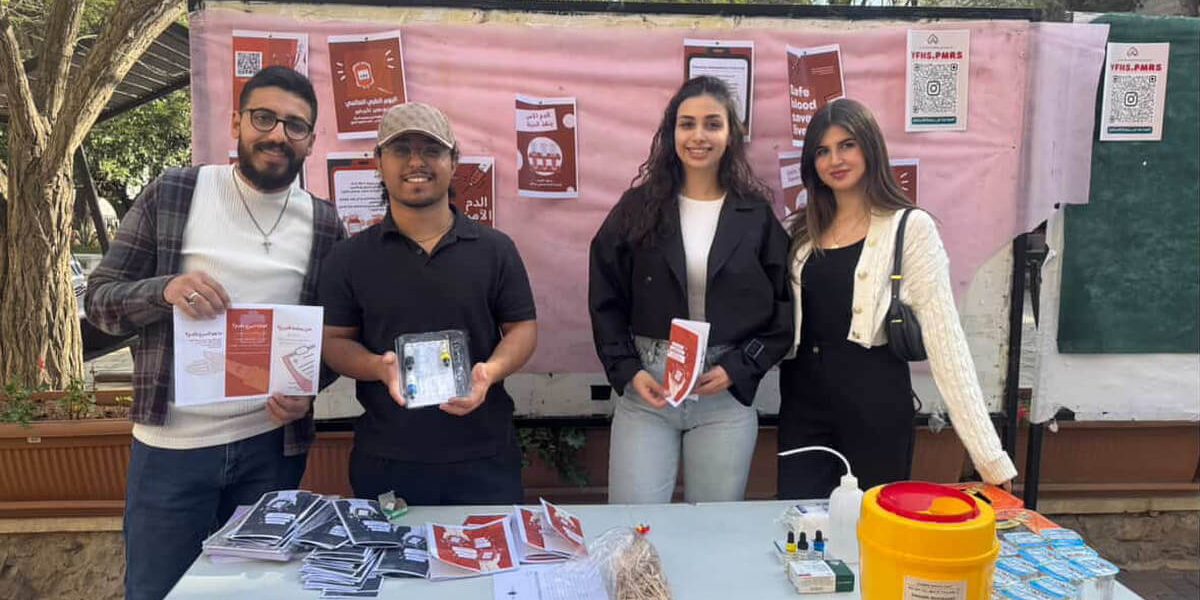
On 20 November 2025, fourth-year students enrolled in the English for Advocacy course participated in Clinic Day, an event organized by the Deanship of Students through Bethlehem University’s Youth-Friendly Health Center (NAFAS), in collaboration with the Palestinian Medical Relief Society. This engagement formed part of the course’s service-learning project, offering students the opportunity to interact with the campus community while promoting essential health topics.
Two groups of students showcased their advocacy skills through well-prepared campaigns. One group focused on blood donations, collaborating with students from the Department of Applied Sciences to encourage participation and raise awareness about the lifesaving impact of donating blood.
Two student groups delivered impactful advocacy campaigns.
The first group focused on blood donation, working alongside students from the Department of Applied Sciences to encourage participation and raise awareness about the lifesaving impact of donating blood. One of the most memorable aspects of their campaign was an interactive activity in which students were invited to guess their blood type before being tested. This creative approach sparked curiosity and drew impressive engagement, with more than 150 students taking part. Applied Sciences students supported the initiative by assisting with blood type testing.
The second group concentrated on raising awareness about diabetes, presenting key information on prevention, management, and available support resources. Their campaign emphasized the importance of education and proactive health practices, reflecting the students’ dedication to advocacy and community engagement.
These projects are part of the English for Advocacy course, which equips students with the skills to research, design, and implement campaigns that address real-world issues. Through activities like Clinic Day, students not only practice advocacy but also contribute meaningfully to the well-being of the university community.